
Sweet AI - Chat Dreams
AirBeet, Life Changing PlatformEntertainment
4.5425.00 Reviews
- Version
- 1.0.7
- Installs
- 100.00K
- Age Rating
- Mature 17+
Screenshots


Our Review of Sweet AI - Chat Dreams
 Analysis by Appyee
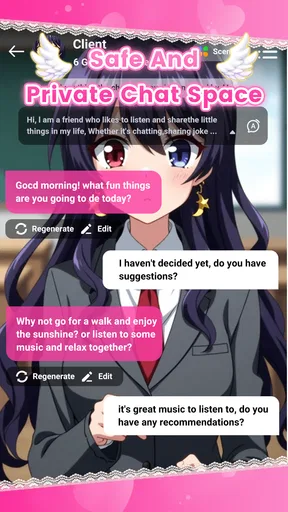
I approached Sweet AI - Chat Dreams as an entertainment app rather than a practical assistant. Its central idea is simple: you interact with an AI character and build an ongoing, personalized story around those conversations. That sounds light, but the Mature 17+ rating matters because the experience is designed for older users and can feel more intimate than an ordinary chatbot or casual messaging app.
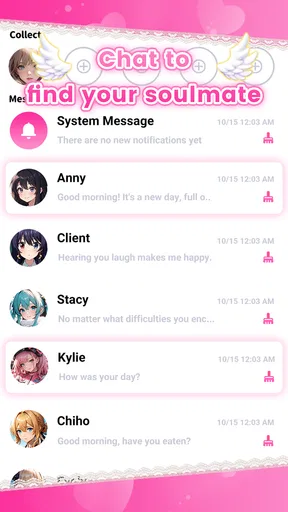
My first impression was that the appeal comes from the feeling of continuity. Instead of opening a tool to ask a one-off question, I would return to a character, continue a mood, and see where the conversation leads. The developer, AirBeet, Life Changing Platform, presents it as a place for AI-driven companionship and storytelling. I found that framing more useful than treating it as a substitute for real relationships or a general-purpose productivity tool.
The app is free to install, which makes it easy to test without committing money immediately. It has reached over one hundred thousand installs and holds a 4.5 average from roughly five thousand ratings, with several hundred written reviews. Those figures suggest that the concept has found an audience, although popularity alone does not tell me whether it will suit a particular user. The better question is whether you enjoy guided, character-based conversation and are comfortable making careful choices around personal information.
How the character experience earns attention
The strongest part of the concept is the shift from blank-chat interaction to a more story-oriented exchange. With a conventional AI assistant, I usually arrive with a task: summarize something, answer a question, or help me plan. Here, the reason to open the app is more emotional and recreational. I can approach a conversation as a small escape after work, a creative prompt, or an improvised scene that develops through my replies.
That difference changes how I judge the quality of the app. Speed and factual accuracy still matter, but they are not the whole experience. I pay more attention to whether the character gives me enough material to respond to, whether the tone feels consistent, and whether I can guide the direction instead of merely receiving generic replies. When those elements work together, the app feels closer to interactive fiction than to a standard messaging utility.
A realistic everyday use case would be a quiet evening when I want something engaging but do not want to start a full game, watch a long episode, or contact someone for a conversation. I could open a character chat, establish a setting, and use a few exchanges to unwind. Another useful scenario is creative warm-up: I might test dialogue, explore a relationship dynamic, or ask the character to continue a fictional situation before writing my own scene.
That flexibility is also the first trade-off. The experience depends heavily on my willingness to participate. Someone looking for a tightly designed plot, polished animation, or a clearly defined objective may find the open-ended format underwhelming. There is no guarantee that every exchange will feel meaningful. AI conversation can drift, repeat familiar patterns, or miss the emotional nuance I intended, so I would treat the app as improvisational entertainment rather than a carefully authored story.
What makes it different from ordinary chat apps
Compared with a normal social messaging service, the attraction here is immediate availability and fictional framing. I do not need to coordinate schedules or wait for another person to reply. Compared with a typical chatbot, the character premise gives the conversation a stronger emotional direction. Compared with interactive novels, I have more freedom to answer in my own words rather than selecting from a fixed set of choices.
None of those alternatives is automatically worse. A real messaging app is the better choice when I want mutual human connection and accountability. A general AI assistant is more suitable when I need reliable help with work, research, or planning. A conventional story game is preferable when I want authored pacing and dependable narrative structure. Sweet AI occupies the space between those options, and that middle ground will feel appealing to some people and vague to others.
One practical tip is to begin with a clear purpose for the session. Instead of sending random prompts and judging the app after a few awkward replies, I would decide whether I want flirtatious banter, a fictional scene, emotional role-play, or simple casual conversation. A defined intention gives the character more direction and makes it easier to notice whether the app is actually serving that purpose.
I would also avoid treating the first exchange as a final verdict. Character-based AI can need a little steering. Short instructions about tone, setting, boundaries, and the kind of response I want are more useful than vague requests such as “be interesting.” This is not a hidden technical feature; it is a user habit that makes a major difference in open-ended AI entertainment.
Trust begins with what I can actually see
Because the experience can become personal, I think trust deserves as much attention as the entertainment value. I would look closely at the permission prompts, account screens, privacy explanations, and any choices presented before sharing details. The important point is not to assume that an AI character is private simply because the conversation feels personal. A fictional personality can still receive information that I would not want connected to an online account or stored in a service.
My rule would be straightforward: keep the conversation imaginative until I understand the app’s visible controls. I would not enter passwords, financial details, identification numbers, private contact information, or sensitive material about another person. Even when a prompt feels like part of the story, I would pause and ask whether the same text would be safe to send to an unfamiliar online service.
The Mature 17+ label is another reason to use deliberate judgment. It signals that this is not an app I would hand to a child or treat as a family-friendly chat toy. Parents and guardians should rely on the device’s own age and account controls rather than assuming that a free download is harmless for younger users. Adults should still decide what subjects and boundaries are appropriate for their own use.
I also recommend checking the account experience before investing time in a long-running character relationship. Look for the available sign-in choices, profile settings, conversation-management options, and any visible way to control or remove information. I would rather understand those controls at the beginning than discover later that I have built a detailed personal history into a service I no longer want to use.
Where money and attention need careful handling
The app is free, but optional purchases range from a few dollars to close to one hundred dollars per item. That pricing span makes it especially important to understand what a purchase changes before confirming it. I would not buy simply because a conversation becomes more engaging or because the app presents an urgent-looking prompt. First I would check whether the purchase affects access, customization, conversation length, or another part of the experience, and whether that benefit matters to me.
My preferred approach would be to use the free experience long enough to answer three questions: Do I enjoy returning to the same character? Do the conversations stay useful or entertaining after the novelty fades? And do the available controls make me comfortable? If the answer to any of those is no, spending more is unlikely to solve the underlying problem.
There is also a less obvious cost: attention. AI companionship apps can encourage frequent checking because every reply invites another reply. I would set a personal stopping point, especially during late-night use. A simple limit such as one short story session or a fixed amount of time helps keep the app in the entertainment category instead of allowing it to become an automatic habit.
Another useful boundary is to separate role-play from real-life decisions. If a character gives advice about relationships, health, money, or conflict, I would treat it as part of the fictional interaction rather than as qualified guidance. The app’s value is in conversation and imagination, not in replacing trusted people or professional support.
Who will enjoy it, and who should skip it
I can recommend trying it to adults who like character-driven chat, improvised romance, interactive fiction, or low-pressure creative play. It may also suit someone who wants a private-feeling space to experiment with dialogue and scenarios without the structure of a traditional game. Writers could use it as a brainstorming partner, provided they keep expectations realistic and do not treat every generated response as polished material.
I would be more cautious about recommending it to anyone seeking genuine companionship, guaranteed emotional understanding, or a stable human relationship. An AI character can imitate warmth and responsiveness, but that is not the same as mutual care. The app is also a poor fit for users who dislike open-ended experiences, want a fixed story with a satisfying conclusion, or become frustrated when generated dialogue loses continuity.
People who are highly privacy-sensitive should take a slower approach. They do not need to reject the app automatically, but they should inspect every visible choice, minimize personal disclosures, and decide whether the account and conversation controls meet their own standard. If those controls are unclear or uncomfortable, a locally stored writing tool, an offline story game, or a conventional book may be a better match.
For users on older devices, the minimum operating-system requirement is Android 5.0 or later. The current release is version 1.0.7, so I would keep the app updated through the normal store process and review changes before assuming that the experience remains identical over time. Since this is a relatively focused entertainment product, I would also consider how much storage, battery, and screen time I am willing to give an app I may use mainly in short bursts.
My cautious verdict after weighing the experience
I see Sweet AI - Chat Dreams as a promising niche entertainment app, not an all-purpose AI companion and not a replacement for human connection. Its best use is deliberate, bounded role-play: I choose a mood, guide a character, enjoy the exchange, and close the app when the session is over. That approach lets the creative premise work without asking it to provide more than it can reasonably offer.
The free entry point is helpful, and the strong average rating suggests that many users enjoy the format. Still, the Mature 17+ audience, broad in-app purchase range, and personal nature of AI conversation mean I would approach it with more care than a simple casual game. I would inspect permissions and account choices, avoid sensitive disclosures, and test the unpaid experience before considering any purchase.
My final recommendation is conditional but positive: try it if you want interactive character storytelling and understand that the quality depends on your prompts, patience, and boundaries. Skip it if you need dependable facts, human intimacy, a fully authored plot, or completely frictionless privacy. Used with those expectations, it can be a pleasant way to turn a spare moment into a small, personalized story. The smartest way to enjoy it is to keep the imagination open while keeping personal control firmly in your hands.
Verdict
Strengths of Sweet AI - Chat Dreams
- Creative dream prompts can help users explore ideas and personal reflections.
- Simple chat-based interface makes the app easy to use before bedtime.
- AI responses can offer different interpretations for the same dream.
- Useful for keeping dream conversations in one convenient place.
- Lighthearted experience suitable for casual, curiosity-driven use.
Limitations of Sweet AI - Chat Dreams
- Dream interpretations are subjective and should not replace professional guidance.
- Some responses may feel generic, especially for short dream descriptions.
- AI-generated interpretations can occasionally be inconsistent or repetitive.
- Users may need to share sensitive personal thoughts with the service.
- The app’s usefulness depends heavily on the quality of your input.
Similar Picks in This Category
View All
Google Play Games
Google LLC3.9

Netflix
Netflix, Inc.4.8

YouTube Kids
Google LLC4.2

Disney+
Disney4.4

Prime Video
Amazon Mobile LLC4.7

Steam
Valve Corporation3.2
Frequently Asked Questions
What is Sweet AI - Chat Dreams and how does it work?
Sweet AI - Chat Dreams is an AI-powered chat and virtual companion app designed for users who want to have personalized conversations with fictional or customizable characters. After choosing a companion, you can send messages and receive generated replies based on the character’s personality and conversation context. The experience is intended for entertainment, storytelling, and casual roleplay rather than factual advice or real human interaction.
Is Sweet AI - Chat Dreams free to download and use?
The app can generally be downloaded without an upfront charge, but some features may be limited unless you subscribe or make in-app purchases. Depending on the version and platform, premium access may include additional characters, longer conversations, customization options, or other enhanced features. Before confirming a purchase, check the store listing and subscription screen carefully for pricing, renewal terms, and available trial conditions.
Does Sweet AI - Chat Dreams require an internet connection?
Yes, an active internet connection is normally required because conversations are processed through online AI services. Without Wi-Fi or mobile data, the app may not load characters, send messages, or generate replies correctly. Performance can also depend on connection quality and server availability. If responses feel delayed, checking your connection and restarting the app may help, although occasional service interruptions can still occur.
Is Sweet AI - Chat Dreams suitable for children and teenagers?
Parents should review the app’s official age rating, privacy policy, and content guidelines before allowing younger users to access it. AI companion apps may include romantic roleplay, mature themes, emotionally intense conversations, or user-generated content that is not appropriate for children. The AI can also produce unexpected responses, so parental supervision and device-level purchase restrictions are recommended for minors.
What privacy and safety considerations should I know before using it?
Avoid sharing sensitive information such as your full name, address, passwords, financial details, private photographs, or personal identification in conversations. Messages may be processed by online systems according to the developer’s privacy policy, and AI responses can occasionally be inaccurate, inappropriate, or emotionally persuasive. Treat the app as entertainment, review its permissions and data practices, and seek trusted human support for serious personal or mental-health concerns.
